I have a trick ankle. It even gives out on me when I am standing still. For most of my life, it was a minor nuisance and hasn’t stopped me from traveling the world. Indeed, I have taken spills at many of the great tourist destinations with the attendant scrapes and bruises that accompany such tumbles. These were minor inconveniences and well worth suffering through to see the wonders of the world. I have reached an age when I can say I have see a lot of the world and I am now more worried about my bones than seeing the great sites. I have had to make some difficult decisions.
Uneven pavement is one of the gravest dangers for people with a trick ankle. The cobblestone street is, by far, the most uneven pavement known to man. Why people think cobblestone streets are charming is beyond me. I see a mine field. Any misplaced step on an awkwardly placed stone can send me tumbling to the rocky pavement below. There is a hugely different experience between you body falling on stones and falling on asphalt. Before I can cross a cobblestone street, I study it to find the flattest possible path across. Invariably I didn’t study the street hard enough because I find myself stranded in the middle of the road facing horribly mismatched stones and wonder what next.
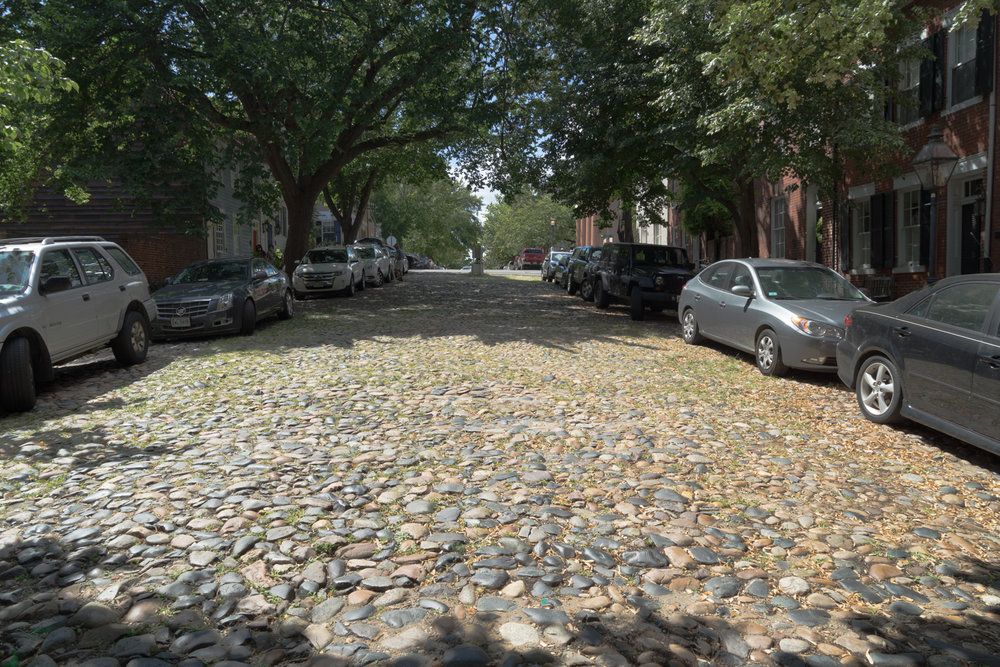
Why cities continue to use these death traps is a mystery to me. Where is the charm? It is a bunch of stones, of various sizes and shapes, thrown down onto a street (see below). Why is this charming? I have been told it is history. Cobblestone streets are a part of history. Well, so are outdoor toilets and I don’t hear people clamoring to keep them to preserve the historical integrity of the neighborhood. After streetlights and electricity were integrated into the modern city, concerns regarding historical integrity were abandoned years ago. So why not consider cobblestone streets the outhouses of roads and apply a thick coat of asphalt to make these roads more walkable and safe.
 Mind Stewing, Fingers Typing