So I wanted to buy a book.

I avoid Amazon because I find Jeff Bezos business practices suspect, to say the least, but I needed to buy the book quickly and didn’t have it in me to try something new and Amazon is easy which is long way to go to say I had to buy a book from the horrible Jeff Bezos.

Somehow in the process of buying the Kindle book, I also bought the audio book. I didn’t want the audio book. I tried to return it. After about 15 minutes of fruitless reads of the “Help” pages. I surrendered. I would to talk to Customer Service. It took me a good few minutes to find the Customer Service phone number but I finally found the hidden icon. I was immediately informed that it would when be a half hour wait to actually talk to someone and they kindly informed that there were other avenues to get help for my problem. Do you really want to wait a half hour on hold when Chat can help you right now.

I tried Chat. I told Chat I wanted to return an audio book. Amazon had a drop down box for accidental purchase which means accidental purchases of audio books is a frequent problem. Now, I want to pause my rant to point out something this should be a red flag to whoever is in charge of their system that there is a problem with people accidentally purchasing audio books. If it happens so often that they have an actual drop down box for it means it happens a lot. But I am pretty sure that the accidental purchase of unwanted products is a benefit not a feature of their system. How much money does Amazon earn from accidental purchases from people who don’t realize they have accidentally purchases something. What a wonderful source of passive income for the company.

Anyway, I was cracking away with the Chat function when Chat told me I could only return an audio book if I paid with a credit card which was mystifying because I had paid with a credit card. Since Chat was convinced that Chat had resolved the problem Chat wouldn’t let me talk any longer about my problem. Whenever I tried to return to the subject of my accidental purchase, Chat reminded me that Chat couldn’t help because I needed to have purchased with a credit card. The matter was resolved as far as Chat was concerned. I am assuming Chat’s reluctance to discuss the matter any further was because Chat was an AI robot and not an actual person. I couldn’t change Chat’s mind because Chat didn’t have a mind to change.

I decided to wait for phone operator. It took about 20 minutes, so less than the half hour mentioned at the beginning of the call. I spoke to Mohamed who took all of one minute to resolve my problem. ONE MINUTE, I tell you. He also let me in on why I couldn’t get a refund from Chat because I needed to belong to some Audio Club to get the refund. This might explain why the system wouldn’t let me use the normal refund process. I wasn’t supposed to get one because I didn’t belong to the Audio Club. The system just lumped my accidental purchase under a general category of not buying with a credit card because that happened a lot more.

I was bothered that I shouldn’t get a refund for my accidental purchase. It was an accident after all. In a conversation that resembled a comedy show routine, Mohamed said that only club members could return audio materials but I reminded him that I accidentally purchased the audio item. Mohamed then said and that was why he was refunding my money. He just wanted me to know that, in the future, I couldn’t return audio materials. But what if I accidentally purchase it, well then Mohamed said he would refund. Which begs the question why not just use the regular Amazon return system instead of forcing me to call them and explain that I accidentally purchased an audio book.

Never mind, I am pretty sure that Mohamed didn’t understand the policy either. He was doing his job, and quite well I might add. Someone up the food chain wants customers to know that if they accidentally purchase an Audio book they aren’t supposed to get a refund unless they belong to the Audio Club. Mohamed ticked that box. He didn’t understand the policy any better than I did so he couldn’t explain the policy to me. He followed his company script and that was all that mattered.

There are several reasons for me to be irritated with this customer service encounter:

  1. A human being resolved my problem quickly and efficiently. The Chat robot and help pages were time consuming and utterly useless.
  2. Making it difficult to talk to an actual human being is unhelpful. The company is actively thwarting good customer service by giving a show of alternates that aren’t as good. I tried for a good 15 minutes to use the help pages and then tried for another 10 minutes with Chat. Neither could help me, a person could.
  3. I spent a good 45 minutes to get $5.44 back when a human being could have help me almost instantaneously. How is routing customers to ineffective tools and wasting your customer’s time helpful.
  4. I am starting to believe that this is all an intentional way for Amazon to get passive income. How many people give up trying to get a refund? Indeed I thought several times is this worth my time to get back a paltry $5.44. There were so many impediments in my way. First, I didn’t realize I had bought the audio book, then I couldn’t return it through normal return process, the “Help” pages were no help at all, Chat couldn’t help me and I had to wait 20 minutes to get a customer service agent. I am certain that there are people who would have given up and ka-ching and extra $5.44 in Jeff Bezos pockets.
  5. Why aren’t more human beings hired for customer service? Jeff Bezos is a billionaire numerous times over. Real live human beings are better customer service than all the self-help bull shit put in our way. They just are. So why not have the customer service phone prominently displayed on every page and properly staffed so a customer doesn’t have to wait long to get help.
  6. Also, and this over everything else think might matter to someone like Bezos, the whole process made me hate Amazon all the more. Yes, I will use Amazon under duress but I am willing to pay more to stop him from getting any more of money that is absolutely necessary.

Rant complete.
The Trump Administration began raising tariffs back in April. Since then some have been lowered and some have been raised mostly based on the feelings Trump has towards the particular countries involved. In a remarkable display of peevishness, he raised tariffs on Canada based solely on the behavior of one Canadian citizen who deigned to remind Trump of Ronald Reagan’s Free Market philosophy. One Canadian playfully reminds Trump of one of the base tenants of market capitalism and all of Canada must suffer.

There is no explaining Trump at this point so I won’t even try but it is interesting how business people and libertarians continue to support Trump when his actions are contrary to their philosophy. Trump clearly believes that government can be used to interfere in the market and help individual players he likes. This isn’t laissez faire capitalism.

Raise tariffs to protect American businesses. Lower tariffs because Americans need cheaper beef. Raise tariffs because someone was mean to me. How are businesses supposed to rationally price their products in a global economy based on the capricious actions of one man is beyond me. But then, and this is the real lesson here, American Business has never been a big supporter of laissez faire capitalism. No matter what they say.

Talking to a doctor’s office, not the doctor, but just the fucking doctor’s office has become nearly impossible.

In late September, I talked with my primary doctor about a skin problem I was having. He advised me to see a dermatologist and referred me to one. I called the dermatologist for an appointment where I was strongly advised to leave a message and that someone from the doctor’s office would call me back. I get an email that very same day saying that someone would investigate (I am assuming whether they take my insurance and they will pay for it) and get back with me. So far, things are going swimmingly.

But then no return phone call for a week. As I was going out of town, I put it on hold, thinking foolishly, that eventually someone would contact me with an appointment. When I returned to San Diego, still having not received a response from the doctor, I called the office to inquire about my appointment. I talked to a nice woman who apologized profusely about the failed response and booked an appointment for me. Success.

A day or so later, I received a phone call from the nice woman telling me that while they took my insurance this year, they weren’t taking it next year. Since it is now mid-October and the soonest they can get me an appointment for was mid-November, they didn’t want to start seeing me as a patient in cases their services were needed into 2026. All vaguely rational sounding, so I went back to my primary physician.

The assistant at my primary physician’s office, who has always been helpful, couldn’t understand why they just didn’t keep the appointment and, if I needed further treatment, refer me another dermatologist in 2026. She said I had a legitimate concern about a growth on my hand and they could, at least, get the ball rolling.

She told me she would take care of it. A day later she calls me back saying that they don’t want me as a patient and she find another dermatologist to look at my hand. She added it might take a little time because she now has to investigate which doctors will take my insurance in both 2025 and 2026. Towards the end October, she finds one.

I got swept up with other events in my life but was finally able to contact the new dermatologist at the beginning of November. A very unhelpful phone tree took the call. The recorded message kept advising me to use the on-line scheduling system. My experience with on-line scheduling has been horrendous. There is no response to my request or a continual back and forth about a suitable date for the appointment.

I opted to stay on the phone line where every so often I was encourage again to use the on line system or leave a message on the recorder and someone would call me back that very same day. My experience with this is I rarely get a call back and, if I do, it is never on the same day. I chose to stay on the line. Fifteen minutes into my wait, I was disconnected. Or I think I was disconnected. I stopped getting the annoying messages about using the on line system and my phone stopped timing how long the phone was. There was just silence which I deduced was a hang up.

I called again but this time I decided to look at the on line system. I completed the form as best I could knowing that there would be a back and forth about the actual appointment. I sent the form in while waiting because what the Hell, I was on hold any way, it was something to fill the time, I got some lunch and, after a half hour on hold, I surrendered. I would just have to trust that the on line system would work.

Later that day, I received a response from their on line system telling me that they were working on scheduling my appointment and I they would confirm an appointment soon. I don’t like the sounds of soon. Soon. That could be any time frame they choose.

So it is approaching the middle of November and I still do not have a scheduled date for someone to look at the growth on my hand. Think about that. A month and half just trying to get a fucking appointment.

Thank God I don’t live in a country with socialized medicine who knows how long I would be waiting for an appointment.

I managed people who held low level jobs and limited opportunities for advancement. They are, by and large, an unmotivated bunch. They did their work adequately and left on time. They weren’t there for more than a paycheck. Good for them, I say.

One of the things my managers frequently tasked me with is how to motivate these people. And before I could say more money they then added the painful restriction without offering them more money. More money was always the hitch. The companies wanted to motivate the employees without paying them more. Needless to say, nothing we ever came up with worked.

The problem here is that the highly compensated people who run companies have convinced themselves that more money only works to motivate high level people. Low level people want something else. I attended seminars where I was told countless times that employees actually want other things than more money. They want respect. They want autonomy. They want acknowledgment. Notice that all of these things are free for the company. They are also vague and difficult to deliver for the direct managers. How much autonomy can you give to a person who has a highly structured job with expectations of coming in on budget and on time? If you didn’t deliver, you were encouraged to do better; if you did well, you got a pat on the back.

The budget for employee incentives were such that it was easiest to reward the group instead of the individual. So Donut Fridays and elegant Christmas parties were thought of enticements which never delivered the expected punch. I actually had one employee ask if instead of going to the Christmas party could she instead have the percentage we paid on a per person catering charge in cash. She would rather have the 29.99 than spend time at the party. I had to explain to her that this was a group incentive and her choice was the party or nothing. She, obviously, was being facetious but her point was made — the company was giving her something she didn’t want.

Even more ironical is that when I relayed this information to my boss, she completely understood. This to me, speaks volumes, about corporate culture — everybody knows this won’t work, but since we can’t give more money individually we are stuck we these group benefits that nobody cares about and won’t deliver. In other words, everyone knows these actions are doomed to failure from the start but continue doing them because nobody has a better idea.

I worked for a company that diligently surveyed their employees on how they felt about work. A neutral company took the survey, the results tallied and delivered to the employees. Every year the areas where my department scored lowest would be our focus to improve for the next survey. Except, of course, low pay. Everyone knew we couldn’t change that so low pay was a problem when the first survey was taken and low pay was a problem on the last survey I was there for. I am betting, with almost 100 % chance that I am right and after being away for six years, low pay is still one of the lowest scoring areas for my department.

The higher ups, convinced by seminars they attended where they were told that higher pay is not the major concern for employees, made us middle managers attend these same seminars so that we too can understand that higher pay was not the reason people worked. We learned how to encourage employees, how to discipline employees, how to reward them without giving them any money and, of course, nobody was convinced.

What is so baffling to me is this resistance to giving more money when the higher ups know the way to get people to work harder is to give them more money. This is, after all, the argument for giving rich people more money. We want them to work hard right? These people are the innovators, the entrepreneurs, and the risk takers. They have to be rewarded. If you take away their money, they won’t work very hard. But if you give them money — will the sky is the limit.

Exactly. So why should regular employees be treated differently? It is a blindness to the very economic tenets that Business so enthusiastically embraces. But by all means, continue with the Pizza Parties and Donut Fridays. I am sure one day that it will eventually work.

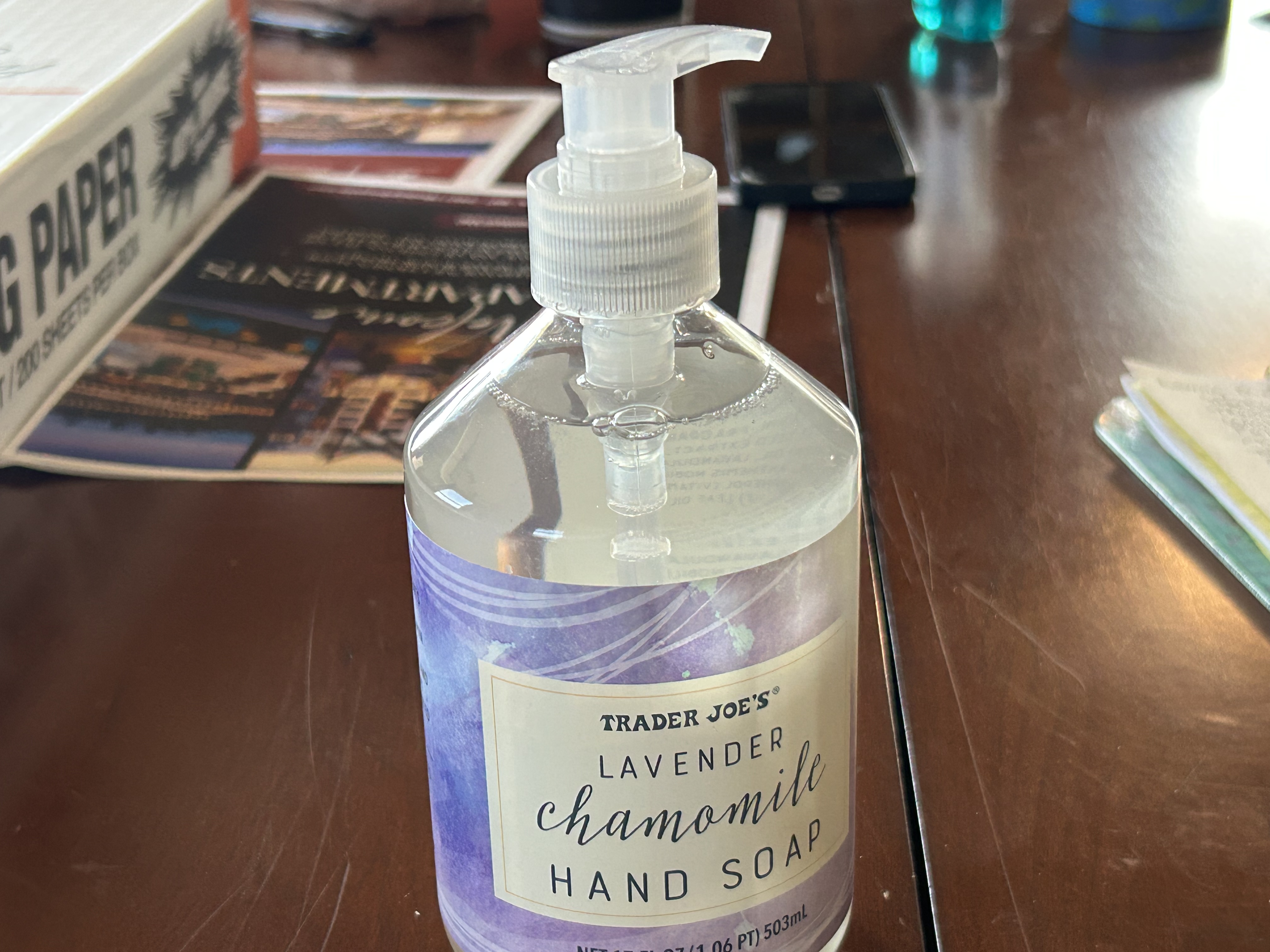
Trader Joe’s Lavender Hand Soap is making my life a little less brighter for one very simple reason — it is frustratingly difficult to open. All you are supposed to do is twist the nozzle and, at some point, the nozzle should spring open and then let you push down on the nozzle so that soap is dispensed.

Except that the nozzle, at least for Bob and I, never springs open. At least not easily. It turns and turns and turns and never springs open despite twisting it for minutes at a time, chewing on the nozzle, banging it against the table, pulling the nozzle up with great force, or using a knife to shimmy the nozzle open. Nothing seems to work until it mysteriously springs open usually at the exact moment that I declare it is impossible to open and I am giving up. It opens.

I don’t know how I did it. So, instead of moving onto a new product, and because Trader Joe’s is a frequent stop in our shopping, I try it again thinking that the previous container was somehow defective. It wasn’t.

This makes me relive the previous frustrating experience where I struggle to open the spring using every bit of muscle and brain I can muster. Nothing works and, then, somehow after frustrating minutes trying to open the damn thing, the spring activates. But why is still a mystery.

I am convinced that it is a simple solution and, because I am determined and thick skulled, I keep buying it in hopes of discovering the mystery of the Trader Joe’s Lavender Hand Soap spring. One day my friend. One day, I swear it.

So farmers and hotel companies are having trouble finding replacement for immigrants who, fearing for their safety, are leaving these jobs because they are vulnerable targets for ICE raids. Trump, being a hotelier and dependent on this same immigrant labor force, is now being forced to choose between cheap labor or cracking down on illegal immigration.

The whole point of Trump and the Republican’s campaign against illegal of immigrants, as Matt Walsh points out, is Americans now will take these jobs at a higher and more livable wage. Labor will become more dear and thus business will have to pay higher wages in order to fill those jobs.

And it was not some unintended consequence of their actions. Trump and his cronies said as much in their campaign. Immigrants are taking jobs from Americans. Get rid of the illegal immigrant and the Americans would take the jobs. The problem these economic wizards didn’t count on is that Americans would refuse to do these jobs at the immigrant low wage.

You can have low pay jobs with immigrant labor (more workers) or higher paying jobs with American labor (less workers) but you can’t have low wages with just American labor. It is all down to supply and demand.

Trump, being a Wharton School of Economics graduate, should know this. That he continues to have problems with understanding basic Capitalist theory is trouble particularly since he sees Capitalism as the solution to USA’s economic woes. He was wrong about tariffs and he is wrong about immigrant labor. He also gives an inordinate value to bullying people as a method of negotiating.

Adam Smith, Milton Friedman and Ayn Rand would be appalled.

Throughout my work life, I have been told numerous times that my wages were in line with industry standards. For some reason, this bullshit answer actually shuts down any follow up questions regarding increases in workers wages. How can you argue with wages that are in line with industry standards? Every one else is getting the same.

But we should. Start with why is keeping wages in line with the industry standard even the goal. Wouldn’t you want to have the best wages to attract the best workers? Keeping wages in line with a standard wage is unfair to the regular worker particularly if the company is a financial success.

I understand if a company is struggling and needed wage concessions to survive, the employees might agree to those cuts in order to keep the company going. People wouldn’t be saying you have to keep your wages in line with industry standards. The company needs saving, sacrifices have to be made.

Then why would you say that when the company is successful? Shouldn’t the workers share in the success of the company?

The concern is that if one company gives their low wage workers a pay rise, that other companies, within that industry, will have to pay higher wages in order to compete. Yes, exactly, after all isn’t that what market capitalism is all about. The best workers should get best wages. But, no, this isn’t the case. Wage increases at the low end of the scale causes inflation.

This same philosophy, however, does not apply to wages at the high end of the scale. Large increases at the high end of the scale doesn’t cause inflation to the broader economy because fewer people receive them. It does, however, cause wage inflation for those few people who get them. This is why there has been such a dramatic rise in wages for upper management.

This isn’t, however, capitalism because the low wages are artificially low to control inflation which everyone agrees is important except when it comes to prices and executive wages. There is an industry standard for low wage workers and companies want to adhere to this standard to keep wages low across the industry. Inflation, you know.

So whenever I hear people moan about how bad employees are today, I ask — are you paying above market wages in order to get the very best people. If you want good workers, you have to pay for it. Right? Isn’t that the whole spirit of market capitalism. If not, then why exactly do you think your industry standard wages will get you the employees you want? It makes no sense in a capitalist economy. You should expect mediocre employees with little interest in putting in their full effort into the job because they could lose their jobs today and find a comparable job tomorrow.

Bob and I recently stayed at a hotel in Hollywood. By and large, it was a good experience. The bill, however, was irritating because the rate changed by $100 based on resort fees and parking fees. I understand why the parking fees might be separate as there are some guests who don’t bring a car.

But resort fees are 100% deception. There is no good reason for them. The guest has to pay them regardless if they used the gym or the pool or whatever amenity the hotel decides to put into the resort fee. So whether you used the resort amenities or not, you are on the hook for paying for them. What is the point of causing all this confusion at checkout? Bob remembers standing in a checkout line where the four people that proceeded him were arguing about the resort fees. Why not just include the resort fee in the hotel rate thus avoiding this problem for both guests and staff at the end of the stay?

I really thought the must be a good reason but, as of yet, the only thing I can find is deception. The resort fee hides a portion of the room rate to the customer. The guest thinks that they are paying $200 for their room but when they depart they are actually paying $250 after the resort fee is added. Many customers don’t discover this until they are leaving the hotel. So why do hotels risk pissing off their customers with this silly trick while also taxing their staff with explaining the bill to angry guests? Why not just include it in the rate?

Because it brings in revenue. In 2015, resort fees brought in 2.47 billion dollars. What is worse, as I looked into resort fees, it is even more deceptive than tricky customers into booking at a low rate and charging a higher one at check out. It is also a way to avoid paying taxes. Hotel occupancy taxes are usually higher than the regular sales tax. The quoted rate is charged the occupancy tax while the resort fee is given the lower sales tax. If the hotel is particularly crafty, they then can charge the higher tax on the resort fee while only being charged the sales tax by the government. The hotel then pockets the difference. The guest is screwed and the government is screwed. Who checks their bill for the correct tax being charged? Who would even know that a difference tax should be charged? Who even knows what the local tax rate should be? I wouldn’t until now.

Furthermore, the hotel only has to pay commission to travel professionals who book their hotels on the room rate and not the resort fee. I don’t know what else to say about this. They are ripping off their travel partners. If I were Kayak, Expedia or Priceline, it would make me a little leery of the hotels that use this practice. Where else are they being shifty about? It doesn’t exactly give one confidence in the veracity of the hotel.

The most irritating thing about resort fees is there is no justifiable reason to have them other than deception. Hotels are being deceitful to their guests and to travel professionals. They are making their staff defend a deceptive practice and they might even be engaging in a little tax evasion. Why is such a clearly deceptive practice still legal?


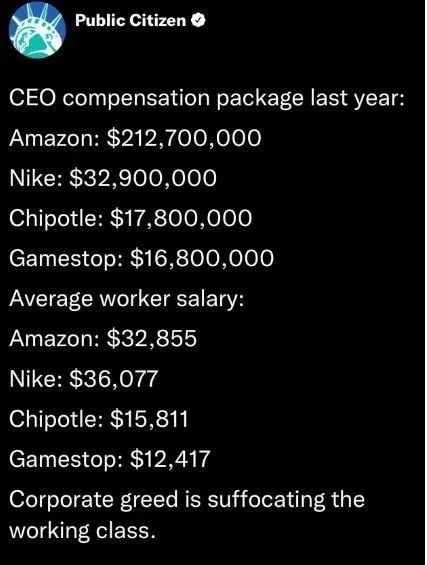
Tom Knighton explained why the above CEO Salaries are in line even though they are disproportionately higher than the average employee. It has, you guessed it, something to do with capitalism.

First, Knighton rightly points out that the excess money that these CEOs makes, if confiscated from the CEO’s and divided among the average employee, wouldn’t make a difference in a lower paid employees paycheck. Well, yeah, one executive’s salary wouldn’t make much of a difference but what about the other executives’ compensation. Most companies have VP and executive VPs coming out the ying yang who are also grossly overpaid. Throw those salaries in and I imagine you would have a much bigger kitty to distribute.

Then CEO’s have a responsible position. If they make mistakes, they could endanger other people’s jobs. Spare me. If CEOs are doing their job right, they could be eliminating jobs, so it doesn’t much matter much to the average employee. Let’s face it the average employee’s job is always under threat whether it be automation, elimination or outsourcing. The idea that the CEO is protecting his employees jobs is laughable, at best. If the shareholders and top executives are making money, there is little concern about the lower paid employees. Indeed, the average employee might be in more danger from a good CEO than a bad CEO. Besides the CEO has a team of executives working with him. If he makes a decision, it is being vetted by Board of Directors and other Executives, he rarely, if ever, makes an important decision alone. The risk is low of something disastrous.

Finally, and most importantly for Capitalism, Knighton believes you can find lower paid employees anywhere, it is difficult to find someone who can be a CEO. Knighton might look into the meat packing industry who are trying to find workers to operate dangerous machinery. Slaughter houses are having such a difficult time hiring people for these positions that they are breaking the law and hiring minors. They are also lobbying state legislatures to lower the age to work in these slaughter houses. As opposed to say, raising wages significantly in order to attract adults willing to risk life and limb to operate these machines. Why doesn’t the same philosophy of higher wages attracting the best people used to attract the best machine operators? If it works for CEO’s, it just might work for average employees as well.

As far as CEO pay is concerned it would be interesting to see if a lower pay was offered to smart ambitious young people who have yet to prove themselves what the results would be. What’s the worse that could happen? It’s not like the CEO would lose his life if he made a mistake, not like the teenagers working in a slaughter house. And, if they succeed, a lower wage for CEO would then bring more revenue into the business. Which is a win win right. I mean isn’t keep wages low one of the primary goals of a CEO? Why shouldn’t the CEO’s salary be included in this consideration. I am pretty sure you could find someone willing to do the job for less and I am betting that a good number of them could do a job. On the other hand, I know for a fact that slaughter houses can’t attract the right people to work in their establishments. Who, then, is more important and deserving of higher salaries?

Sorry, I still ca

In a disturbing trend, businesses, particularly in the slaughtering animals industry, are continually being caught using underage workers. This has happened before (see here and here) and it seems to be gaining ground. Some Republican controlled states are trying to make it easier for businesses to hire underage labor. These aren’t jobs working at movie theaters or restaurants, these are jobs using dangerous machinery and the Florida law wants to allow up to eight hours of work. Sixteen year olds working full time and going to high school. This could be about 2/3 of their day. Tired workers using lethal machines, sounds like a good idea to me. I don’t think that most adults would perform well under these circumstances much less a 16 year old. But never mind, protecting children isn’t the concern here, cheap labor is.

The fact that these businesses continue to get caught is enlightening about their motives. These businesses are making a clear business decision. It is cheaper to break the law and pay the fines than it is to pay higher salaries. Since these are conscious decisions, it undermines the notion that these are God-fearing people making innocent mistakes. These are, in fact, criminal enterprises – knowingly breaking the law to their advantage.

If you needed any more proof regarding the criminality of these businesses, Exclusive Poultry, one of the businesses fined for hiring the underaged, also broke other labor laws. They underpaid their worker’s wages. This can’t be shrugged off as some error in HR. This is a conscious decision made by the managers in the firm to rip off their employees and, more telling, is it would have to involve people up and down the food chain. I believe this is called a criminal conspiracy.

From this I can surmise the following:

  1. Fines for labor violations are too small to have any detrimental effect on business. That so many businesses, particularly in the meat packing industry, continue to do business despite seemingly large fines suggests that they weighted their options and paying the fines was the cheaper one. In order to discourage people from breaking the laws, like with any law, the punishment has to be a high price to pay. Right now, these fines are just a more economical choice for these law breaking businesses which only encourages them to break the law.
  2. Wages need to be higher to attract qualified adults. These are dangerous jobs. People are risking life and limb to perform them. What adult labor is saying is that businesses are not paying enough for them to take this risk. In a functioning capitalist society, this is when higher pay works. Businesses clearly have the money to pay higher wages but paying government fines is a better deal.
  3. This brings me to the Republican Party. The party of family values and protecting children from books and transexuals. They are also the party, at least in Florida, willing to let 16 years work a full eight hour shift and then go to school. How can an adult be doing both well much less a 16 year old. So when you hear Republicans babbling on about protecting children — just remember no child has been killed by a transvestite reading them a story but several have been killed in workplace accidents. Which means that an awful lot of energy that the Republican party is expending on transvestites is wasted while a very real danger to children is being ignored.
  4. None of this distinguishes modern business enterprises. They are either evil or incompetent. This isn’t a few errors. There are multiple infractions involving multiple laws. Given their incredibly weak defense, these businesses are criminal and thus evil.  But, to be fair, let’s consider incompetence. They are unable to vet potential employees to see if they meet the minimum age requirement for a dangerous job. This happens a lot so they aren’t just bad at it, they are so bad that they are unable to follow the law. If this is the case, and this is what these businesses would have the public believe, then why should the public believe they are capable of following the health standard requirements for slaughtering animals or employee safety laws.  So while incompetent may absolve them of criminality, it isn’t particularly reassuring about their business practices. It would certainly make me a little suspicious. It also opens us up to a third option that they could be both evil and incompetent. The most frightening and dangerous combination of all.