The New York Post is complaining that people get too much money in unemployment benefits so they opt for these benefits over working an actual job. Boo Hoo. Let me try to shed a tear.

First, and most importantly, I don’t know where the Post is getting its statistics but they are both wrong and misleading. As a recent recipient of unemployment insurance, I can assure you that it is nowhere as large as the Post is stating. I received the maximum benefit for unemployment which was all of $450.00 a week which is $11,700 in a six month period. When I reached the six month limit, I was immediately cut off.

How the Post got $71,063 as the maximum benefit for the state of California is wrong. The statistics that the Post provided base there numbers on both adults in a family of four (2 adults and 2 dependent children) being unemployed. Highly unlikely but OK for the sake of argument lets go with it. Using California as a measurement this means $23,400 is the maximum benefit they would receive. The average cost of the Obamacare Health benefits for a family of 4 without subsidy is $1,403. I doubt that the government subsidized $38,000 for a benefit that only costs $1,403. The Post’s numbers just don’t add it.

Then, there is that the Obamacare subsidy is based on a person’s last year of income tax statement. When I was investigating whether to take Obamacare when I became unemployed I learned that I was ineligible for the subsidy because I worked a complete year and thus made too much money. I would become eligible for the subsidy only after I filed for income tax in the next year. By this time, I lost my unemployment benefits so coupling Unemployment and Obamacare benefits is misleading. The unemployed rarely, if ever, receive both benefits at the same time.

The Post also uses the maximum benefit as its benchmark. What the Post failed to advise its readers is that only the highest paid earners received the maximum. People who made lower salaries, received a lower level of unemployment insurance benefits. Yet, the way the Post frames their case, every unemployed person is making $71,063 (at least in California) on Unemployment Benefits and Obamacare. This sum isn’t even close to the truth. Most people aren’t receiving the maximum benefit and are not receiving it in conjunction with Obamacare subsidies.

Finally, and most damning of all, the present unemployment rate for nation is 3.7%. There isn’t a lot of unemployed people to get back into the workforce. Cutting Unemployment Benefits isn’t going to change this.

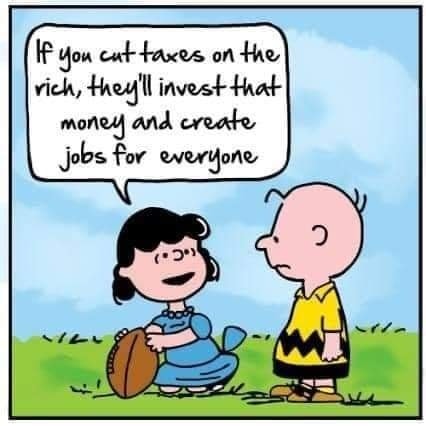
So what is a poor businessman to do? The answer, rooted in Capitalism, is he should raise wages so he can attract workers. Perhaps stay at home mothers, retirees and students might be enticed into the workforce with higher wages. Why not give it a try and see what happens? But, no, the Post would rather complain about the lazy nature of the American Worker instead of recommending that businesses adapt to the present economic situation and pay higher salaries.

I was surprised to see this article about teens illegally working for PSSI, a company that cleans up for meat plants. So here we are in 21st Century USA where companies hire underage labor to do their work. In this case, the work also is dangerous because it requires the use of toxic chemicals and machines capable of killing a person.

PSSI claims that it did a thorough check. It is not their fault if these precocious teens used false documents to get their jobs. This argument will probably get them off the hook. The company may have to pay a fine, an upper management person might have to fall on his sword but when all is said and done the country needs people willing to clean the dirty floors of meat plants.

The teens in question were immigrants which makes me curious about this company’s HR practices. Being immigrants, I would think the company would be particularly careful when a prospective employee provides this information. The Federal Government requires every employee to prove that they can work legally in the USA. This is the whole reason for law. But 31 underage teens got employed. I mean I can give PSSI one or two teens getting through a rigorous vetting of the documentation but 31 suggests something altogether different. HR was either not checking them at all or not caring that they were fake. Also forget the documents, I suspect that some of these teens actually looked like teenagers. There were 13 year olds working at the meat plants. That someone in charge wasn’t a bit startled to see all these fresh face youths working in the plant and not question their age is alarming.

This raises another question for me. If PSSI wasn’t checking documentation to ensure the age of their employees, how well were they checking the adults they hired for their immigration status. I suspect not very well at all. Which gets us closer to the real problem — PSSI can’t get many American citizens to do this dangerous job for the wage they are paying. I mean why else would they overlook the law regarding underage employees. The company was taking a risk. The fines are probably minimal and, mark my words, there is probably a tidy sum set aside for just such an exigency. So if a company needs to pay low wages with little risk of getting caught and minimal financial hardship or legal punishment if they get caught, what is a company to do? Hire the most vulnerable and desperate people and hope they don’t get caught.

Capitalists are pretty adamant that prices must follow the market. If there is less of a product and high demand, the prices go up. If there is a surplus of a product and low demand, the prices go down. The same, at least in theory, applies to wages. Except it doesn’t. Companies set the wages they want to pay and then find the people who will work at those wages — even if they have to act illegally to get those employees. They would rather illegally employ children in dangerous jobs at low wages than up their wages in order to attract a legal adults. This is not how market capitalism is supposed to operate.

It makes me curious as to why the Republican Party has not latched on this particular problem. They oppose immigration. They say they want Americans in good private industry jobs. Enforcing child labor laws and immigration laws would seem like a no brainer. Make it difficult for companies to employ illegal immigrants and children. Hurt companies with hefty fines and imprisonment of executives who break these laws. If there are no jobs for immigrants, a large wall on the border would be unnecessary. They wouldn’t come.

Of course a large wall on the border would involve all kinds of construction and money, money, money for everyone and the immigrants would keep coming. Business secretly wants these low wage immigrants because they can control them better than American citizens. If the Department of Labor started enforcing labor laws, it would get messy fast. The Federal Government might see how business actually operate, the government might even try strictly enforcing these laws which might force companies to pay higher wages.

This is why we have children in 21st Century America working with toxic chemicals at dangerous jobs.

One of the more pernicious bromides that infects American life is the idea that you can do anything you want, be anything you want. You just have to be willing to put the time and effort into it. Of course, there is some truth to it. Yes, some people are lucky enough to achieve their dream but not terribly many and some start with hidden advantages that makes their journey to success a bit less bumpy.

The American ethos is built around the stories of the very few winners in the race and not the millions who struggle on the less glamorous sidelines. But we know it in our hearts. Millions of people will not be Super Bowl Quarterbacks. Millions of people will not be Rock Stars. Millions of people will not be President. Millions of people will not become billionaires. An overwhelming number of Americans will lead regular lives with regular incomes no matter how hard they try to be something else.

Yet, we still hold to this idea that you can do and be anything you want. It’s unhealthy and it is cleverly couched in language that conveniently blames the individual for not fulfilling his dream. There is always that if you willing to put the time and effort into it part of the equation that makes this idea impossible to refute. Obviously, it’s not the system that failed, it’s you. You just didn’t put enough effort into it, did you?

Yes there are people who beat the odds. We love to hear their inspirational stories hence the mind numbing blather about Olympic athletes overcoming impossible odds to follow their dreams. On the other hand, you don’t hear the stories of all those athletes who fought impossible odds and didn’t make to the Olympics. Obviously, there are more of these stories than the success stories but these stories don’t get heard. We only want stories that reveal something great about America. The problem is that these failure stories are telling an important American story. Everybody doesn’t make it to the top. Most people don’t. It could be lack of money. It could be bad breaks. It could be the slightest lack of talent. She sings well but there are other singers just the slightest bit better. Or how does five foot tall basketball player get into NBA?

People have to be realistic. That doesn’t somehow fit into the idea as presented. You can be anything you want to be. How is this a good idea to pass onto children? Telling children to have big dreams, go for it and then when they fail, letting them think it’s their fault for failing. Because they will, because there is always that second part of the idea, if you try hard enough. Yes, let’s be realistic, but not too realistic because we wouldn’t want to discourage young people from beating their heads against the wall trying to be something they didn’t have a chance in Hell of becoming.

Business managers are complaining about how people won’t work like they used to in the good old days. As the linked Los Angeles times article points out, this is a complaint as old as the Republic. The problem isn’t the workers, it is the wages.

I once worked at a call center. I supervised workers who made hotel reservations and they, on a busy day, may receive 20 or more calls in an hour. Having performed the job as an employee, I can assure you it was boring job full of mindless tasks. It did pay the bills. Barely. Call center operators are taking calls pretty much the whole time they are on the clock. This is the way companies want it. They want just enough operators to make sure that they only lose a small percentage of incoming calls. That’s right, they would rather their employees are always working than all of their customers get served.

The call center’s biggest problem was employee turnover. Because the pay was low and there was rarely any employee commitment to do anything other than an all right job, and, if they lost their jobs that could easily replace this job with one making the same wage, people quit or lost their job on a fairly regular basis. This meant that management generally was in a hiring and training mode most of the time.

Sometimes, the Uppity Ups would wonder why we couldn’t slow employee turnover. I’m sure my bosses, who were all a pretty smart lot and knew the answer to the problem, would suggests more money for labor. It was a dance that everyone knew had to be danced but that never really changed anything. Because more money for lower level employees is always off the table. The Uppity Ups received the truth and then acted as if it was never proposed. More money for lower level employees is a budget buster. Strangely, more money for higher level employees is not.

The Uppity Ups that counter the idea that more money will make lower level employees happier in their job. They have read some article in a business management magazine which site scientific studies that say people don’t just work for money. Money isn’t even one of the top reason that people work. Try to work on these other non-money reasons to bring down worker turnover because these studies prove that more money isn’t the answer. Employees want recognition, they want challenges, they want better jobs, and then they want money. So we would go off and see how we could improve those other areas.

We found that we were just as restricted in improving employees work life in those other areas as we were in more money. We needed employees on the phones not at the better jobs. This being the fact. We had significantly more entry level jobs than upper level jobs. Once anyone managed to get one of the upper level jobs, they stayed forever. So these better jobs rarely became available and just as a side note that me be obvious but I feel compelled to mention, a better job meant more money. The reason many people go for better jobs is they get more money. Regardless, this option was off the table as well.

Challenges. The job was answering the phone and booking hotel reservations. Almost every call was exactly the same. Different cities, different dates, maybe but there were no challenges except getting the customer off the line quickly and making no mistakes. The company already had a negative incentive on those two tasks — if you failed to meet standards after a three month period, you were fired. There was no challenge we could add to the job and there was no incentive in doing either task much better than you were. There, also, was an amazing disincentive to getting better at either task. If you worked faster, you made more mistakes. Which could put you on warning. If you made less mistakes, you talked too long. This too would put you on warning. Once you found the right balance, you maintained it. All management was left with was recognition and there are only so many pats on the backs a person can take before it looses its effectiveness.

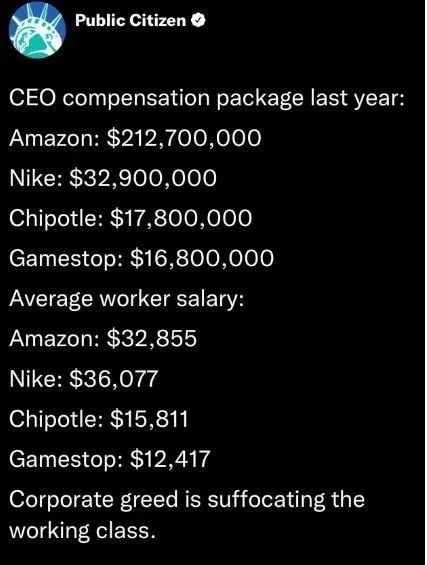
In reality, all we could do was give them recognition. Everything else was off the table. Recognizing good work without spending a dime. More money isn’t the answer says the uppity ups. But it is and they know it is because this, of course, is their defense of the income imbalance between the top wage earners and the bottom. You have to pay top management top salaries in order to interest them and keep them in the job. Why doesn’t that same philosophy work for lower wage workers?

But I never stopped believing that if low level employees got more money for their jobs and, because they received more money, these jobs might be something they value and would want to keep, that there would be less employee turnover. The Uppity Ups refuse to believe this. They just can’t believe that people don’t value the crap wages they are paid. Herein lies the problem.

I accidentally got involved in Facebook argument the other day.  I know better than to argue with people who disagree vehemently with my position as I can never change that person’s mind. NEVER. If a person is passionate about an issue they are committed. They do, however, think that they can change yours. The argument will begin with the pretense of reasoned argument and end with taunts and name-calling.  I avoid these types of arguments as much as I can.

I stepped into this particular pile of shit because I thought I was replying to someone I knew, and probably agreed with. The post had the following statement: Why do you hate the rich? I answered the question with another question: Why do the rich hate us? There are billionaires out there that make more money than they know how to spend, why don’t they give this money to the poor and middle class so that everyone can enjoy a better life.  Today’s rich live in the greatest luxury known to humanity so even if they were taxed more, they would continue to enjoy the good life with little, if any, discernible change in how they live.

As I thought I was talking to my largely liberal friends, who would disagree? Yet, the disagreeing comments came.  When I checked the names of my opponents, I realized these were not people I knew and I should move on without comment.  I need to make a small confession here. I like to argue politics.  It is fun.  Or it used to be. I remember in college that I would go to a bar with people of varying political beliefs. We would drink and argue, but even though drink was involved we were mostly respectful of other people’s opinion, we listened and occasionally minds were changed.

Facebook arguments, if you haven’t been in one, aren’t friendly bar room arguments.  And that alone is saying a lot. I would rather argue with blind drunk political partisan in a bar than a completely sober person on Facebook.  Facebook arguments are savage hand-to-hand combat followed by the full nuclear arsenal raining down on the wounded bodies strewn across a bloody battlefield. It is bloody to participate in, impossible to win and thus pointless to respond.

But if I were to respond this is what I would say.

The crux of their argument wasn’t even an argument, it was a question: why did I care about how the rich spent their money.  It was their money and they earned it. This is where I disagree. What happens is that a company receives profit and the leaders of the company decide to divide the money between the people who are employed at the company.  The people who divide the pot are also the big wage earners. Low income earners are not invited to this particular table.   

It should be no surprise to anyone that the people dividing up the pie are the same people taking the biggest slice of the pie. The perverse side effect of this type of distribution is that high earners demand more and more money because their wages keep increasing and in order for companies to stay competitive they must pay their top earners more while the lower income earners wages are stagnant and there is little pressure to give this group more money. In fact, the top wage earners have abandoned their low wage-earning peers by putting more and more pressure on the lower income earners through automation and out-sourcing. So, while everyone at a company contributed to creating the profit, the top wage earners decided to take the lion’s share of the money claiming that the market made them do it. They personally had nothing to do with this skewed distribution, we are only following the dictates of the market.  If it was up to us, we would happily pay more money to low wage earners but, the market, you know must have its way.

Which brings me back to my question: Why do the rich hate us.  They take an unequal portion of the profits. They drive down global wages. They allow low income earners, people who by the way work a full-time job, to live in precarious economic situation while they live in luxury. They work to limit access to good public services for low income people. They are contemptuous of everyone who makes less money than them. Why do they hate us so?