I have lived in Southern California for over 30 years and everyone here claims to want mass transportation but very few choose, including myself, to use mass transportation. My reason, as I suspect most other people’s reason, is, despite the effort, it is neither convenient or timely. Or this is my impression of mass transportation.

Every time I have experimented with mass transport I have had the same problem — it is easier and quicker to have taken a car. Now, things change and I experiment so little, I could be wrong. Mass transport could be better, easier and quicker but that just isn’t my perception and, as an old boss told me once, perception is reality. The truth is irrelevant if people think the service is bad and a lot of people think the service is bad.

I have visited cities were mass transportation is both good and more timely. For instance, New York and San Francisco have mass transportation that any rational person would choose over a car. So I can be convinced to change my mind but nothing has happened to convince me I am wrong.

Here is my reality. My partner and I were going to a football game. On game days, the city encourages people to take the trolley as there is limited parking and heavy traffic near the stadium. A perfect time to experiment with mass transport. The trip to the stadium was uneventful but the trip home was much more problematic. Some time after departing the stadium, the carriage I was riding in filled with smoke. The passengers were forced to walk back to the station were an already large number of people were standing waiting for the next train which wasn’t coming because there was a stalled trolley blocking the track. Once the trollies began moving, every car was full. Another person couldn’t be pushed into it even if someone tried. And, believe me, people tried. Eventually we made it home but the conclusion we reached was it would have been far easier, even with limited parking and excess traffic, to have taken the car.

In case you are saying well that is unfair. I shouldn’t judge the system based on one system breakdown. And I didn’t. A few years later I had to abandon a smoke filled trolley car and walk back on the tracks to the next available station. Since I have only used the trolley system a handful of times, this has left a particularly bad impression of the system. I am not going to get where I want. I am going to end up walking on trolley tracks to station that doesn’t have my car and I will have to find some other mode of transportation to get where I want to go.

More problematic is that even a good experience with the trolley, and I have had them, you realize that taking a car would be quicker. My best experience was when a new line opened to La Jolla. This one went smoother. No smoke, no abandoned cars, no walks on the tracks. It took a good 40 minutes. If I drove my car it would have been all of 20 minutes and there was plenty of parking at the shopping center where I was going. I could have done this faster in my car and had a much more pleasant experience to boot as there was a homeless man ripping up a stack of free newspapers and throwing the torn pages on the ground. I probably should stopped him but he was much younger and appeared to be a bit crazy.

This brings me to an even bigger problem. The city parents are trying to make San Diego a mass transportation, bicycle riding city without doing any work to make this palatable to the residents of the city. The number of mid-rise buildings going up in Hillcrest, my neighborhood, is alarming mostly because the already bad traffic is now becoming even worse. Trying to make a left hand turn on the street where I live is nearly impossible at some points in the day. There are too many cars and not enough nice people to let you in. They have taken away parking along the avenues to make bike lanes. Bikes lane that so few people use that when I see someone using a bike in them I am startled and will excitedly point them out to anyone with me at the time.

The plan, as I see it, is the city parents are trying to make car driving so miserable that people will choose to take bad and inconvenient mass transit instead. Now this is a big problem because the citizens may make other choices. Like move to other cities. Or to the suburbs. Or elect a less environmentally conscious city council. The solution, as I see it, is to prove to a doubting public that the city can provide reliable, quick and convenient public transportation. This they are failing to do.
Since Bob’s fall, I have learned the secret of getting what you want in the American Medical System — be aggressive. It is the one piece of advice I get from almost anyone who has had any dealings with the system. Be aggressive. You have to be an advocate for your loved one in order to get the treatment they deserve. This advice is given to me so often that it took me awhile to hear what people are actually saying.

I thought good medical insurance was sufficient for good treatment but it also helps to be a bit of an asshole. Now some of you will say being aggressive is not necessarily being an asshole. You can politely but firmly be aggressive. But that wasn’t the advice I was getting. People were actually saying be an asshole, get in their faces, don’t let them push you around. Some of this advice came from medical professionals.

Also, and this is important, why do I have to be aggressive at all? If my insurance covers it, why do I have to aggressively monitor his treatment at all. He should be getting it without asking. But this isn’t the impression of an awful lot of users of the American Medical system.

The saddest part of this advice is we passively accept it as they way things are. The only way to get good treatment is to be aggressive. So, yeah, mother fucker, I will do whatever it takes to get my loved one what he needs. My biggest worry since Bob’s accident is am I being aggressive enough. What did I fail to see or do. Who should I be chasing down. Will Bob get screwed by some mistake I made. This is hardly conducive to healing the patient and it is exhausting for his loved ones.

Whoops, I made a mistake I changed an already published blog. Mostly because I was trying to get out more content because my readers are so demanding. I accidentally looked at this published article and made some changes. I come from a publishing background and vowed to myself that I would never change an already published article’s content and, up until this moment I have lived up to this commitment.

Any way it happened. I am sorry but it is really your fault. Stop asking for this endless supply of new bon mots from me. I am just one man. I am trying my damnedest, but you always want more. So really, dear reader, you only have yourself to blame if I make these mistakes. All right. End of lecture. Go back to what you were doing.

The biggest problem I face living in San Diego is the sidewalks. I have yet to be bothered by an immigrant but I am terrorized, particularly at night, by the general disrepair of the sidewalks here. I have a trick ankle that occasionally gives out on me which means when ever I encounter uneven pavement there is a chance I will be thrown off kilter and find myself on the ground. When I was young, I just got up, dusted myself off and proceeded to where I was going. Now, at 68, I come up bruised and battered. I am increasingly afraid of breaks especially after my partner broke his ankle in a fall on a sidewalk.

That Trump’s focus is on immigrants and not sidewalks is telling. Infrastructure repair would have a bigger effect on my life than the removal of any immigrant. But criminal immigrants sell what Trump and the Republicans are pushing which is the federal government takeover of the cities. So I guess I will continue to struggle with the treacherous sidewalks while Trump rids the streets of immigrants. Something that doesn’t bother me and I don’t care about. But, anyway.

I have spent the last few days in the bowels of the American Medical system as Bob, my partner, took a fall and has been experiencing the noxious gases of this infernal system.

The profit motive is a terrible way to make decisions about a person’s health. What may be the cheapest way to handle a problem may not be the best. Bob took a fall and damaged both legs. He can’t put pressure on either leg for now. This means that the simplest task is virtually impossible for him to perform. We are out of town in Modesto and need to get home for his surgery because the recovery could take up to three months. It makes sense to send him back to San Diego where we live.

The solution they are purposing, however, is ridiculous. They want me to pack the very injured Bob into our car and drive for 7 and a half hours to San Diego. Right now, he can’t get into a wheelchair without the help of two medical professionals. Yet they want me, a 68 year old man alone with a 76 year old physically incapacitated man, to make this car trip.

Now this is where things get interesting. When we balked at this suggestion, the case manager at the hospital decided to argue that it was cheaper for a medical vehicle to take him back San Diego than for Bob to stay in the hospital until he is physically able to make the trip. Brilliant right.

Brilliant and horrifying. The thing that is deciding how to proceed is the cost to the insurance company (in this case Medicare) and not the health of the patient. Even more horrifying is that the people who look at spreadsheets could decide that it still makes more economic sense for me to drive him home.

Now I get it, money has to be taken into consideration at some point but it seems like this is not one of them. The bean counters are weighing the economic cost of two options — paying for an ambulance or paying for a hospital stay. The deciding factor isn’t the health of the injured man. And, more importantly, why do the bean counters seemingly have the final decision. And don’t say the doctor has the final say. The case worker’s argument is financial because he knows the bean counter has the deciding vote. If Bob’s health mattered, the argument would be it is better for his health to be driven home in a car with medical professionals. Right?

I like my doctor and his staff (all of one person). It is a small office and whenever I call the doctor’s assistant either answers the phone or she responds to my messages in a timely manner. So my complaint here isn’t a general one, it is about the big doctor’s office which increasingly run medical offices in the USA. I understand that sharing resources, like switchboards, is cost effective way for doctors to handle their office overhead overall but I have yet to encounter one that delivers good service.

The most annoying aspect is they all have an automated phone tree. You know press 1 for billing, press 2 for appointments, press 3 for etc. etc. The phone tree is a great idea gone bad. They are usually too long for me. I have drifted off thinking about something completely unrelated to my phone call by the time the message ends and I haven’t heard or have missed the department I needed so I have to repeat the message and hope I can focus long enough to get my department.

Then, while waiting for the operator to answer, there is the annoying reminder that I really should be consulting the website. Why are you calling when you can consult the website and get all of your answers there. You are just waiting for who knows how long when you could be looking at the website or leaving a message. Why are you still holding, you fucking idiot, go to the website. If I could get the answer from the website, I wouldn’t be calling the office. I always consult the website first because, even at grand old age of 68, I know you are supposed to consult the website first. One reminder would be sufficient, the constant reminders are irritating so much so that if I do get lucky and actually am connected to person, I am usually livid when they answer. It isn’t pretty.

I would take the phone tree up on the option to leave a message if the office would in fact, return my phone call. My experience with phone tree messages is rarely, if ever, do I get a return phone call. Which is odd. If I leave a message on an actual person’s recorder, I usually get an answer. If I have waited for a half hour and reached the point where I realize nobody is going to answer my phone call and I leave a message on the office’s general phone line — I almost never get a response. And I do mean never.

Then there is the baffling experience when the phone forces me to leave a message even after I have committed to staying on the line no matter what. The call gets switched to an answering machine that says — please leave a message at the beep. I am usually so stunned when this happen that I can’t leave a coherent message. I was all right with waiting. Why can’t I wait anymore but you have heard the beep, the phone tree has made it’s decision and you force to leave a message I know will never be answered.

Phone trees might make sense to the budget conscious medicine business complex but it is wretched customer service particularly when a great many of the callers are older and less adept in dealing with automation period. It is frustrating and confusing instead.

I do want to share one secret that works most of the time for me. Press the button for billing. Billing almost always answer the phone and they can usually connect you with the person you need.

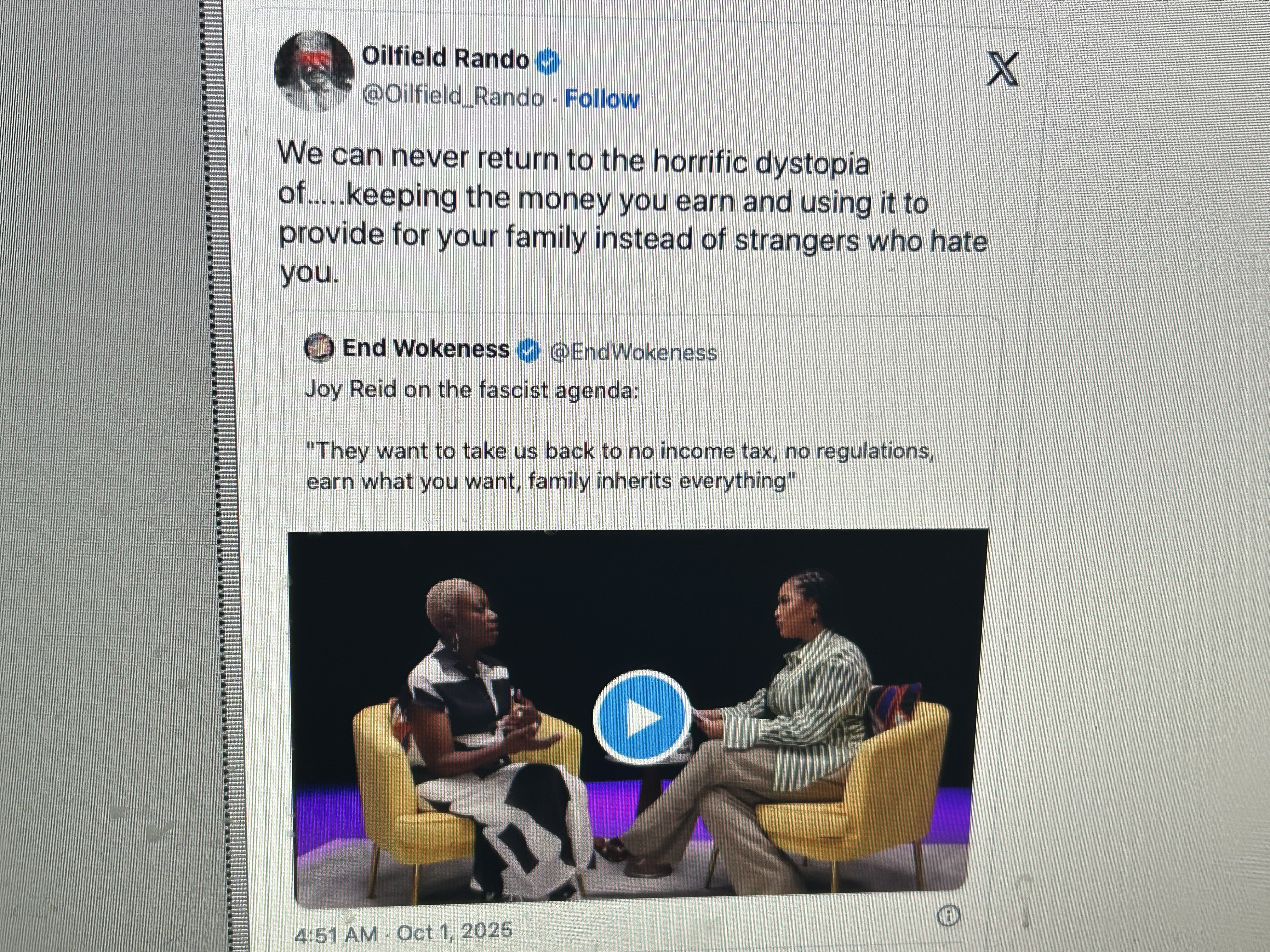
I am amazed when I see posts like the one above. People who want to do away with taxes and regulations have this idea that once they are free from taxes and regulation that they will have all this extra money to spend and lead a glorious government free life. Unfortunately the tax free, regulation free past was miserable. It is only with the expansion of government which regulated the market economy and the taxes paid by the public for these changes did this general misery end.

Once you remove taxation and regulation, people will be presented with an array of new bills which have to be paid. Things like nuclear weapons, the army, the navy, the air force, the justice system, police protection, fire protection, road repair, street lights — all these things and so much more will need to be paid for. Then people will have to figure out if their restaurants meet health standards, buildings are being built so that they will stay up during earthquakes, stopping people from dumping toxins into rivers, checking to see if every household is disposing of human waste properly, to name just a few. Who will do it? How will they be paid?

Is Government perfect? Absolutely not. Could it be done better? Of course. Is this a reason to do away with it completely. No. No more than a Market Economy can’t do everything to meet all of our needs, at least, not without the help of government.

Here is the bottom line — the vast majority of people in this country want a market economy. This isn’t going to change in the near future. In order to make this market economy work, we also need a strong government presence to ensure that the rich, people who have power and money, don’t abuse this power and money to take advantage of people who do not have power and money. This also isn’t going to change in the near future.

This means that we have to figure out a way to make these two, sometimes, antagonistic systems work together. Is this perfect? No but then no system is perfect. Ever. This is our common challenge — how to make an imperfect world work for as many people as humanly possible. It will always be imperfect and we will always be working to make it better. But, given the present interlocking structures that is our system, eliminating Government is absurd and unworkable.

Texas wants to bring back religious training back to the public schools. The idea here is that the majority religion is Christianity and, given this fact, Texas’ children will learn a little bit about it and become model citizens.

I am probably more blase about religious education than the typical non-religious person. It doesn’t bother me in the least because I know after 12 years of Catholic education, religious training only increased my antagonism towards religion. Add forced Sunday church services like my parents did and Texas will probably get the same share of non-religious people as before Texas began religious education. Really if kids are already having problems with math, history, English and science what makes Texas think that educators will be any better with teaching religion?

But that is not that question before us — the question is can Texas government make children learn about Christianity. I would unequivocally say yes if it weren’t for one important factor. The assumption here is that Christians will sit down and agree on what is to be taught.

Given the past 2,000 years of Christians bitter and brutal quarreling about Christian doctrine, this assumption is a lot of wishful thinking (See Savonarola, St. Bartholomew’s Day Massacre, 1970’s Northern Ireland if you need some refresher on this). The primary reason the founding fathers separated the Church from the State is that European Christians had spent the last thousand years or so killing one another over religion. All of whom claimed, by the way, they were Christians.

The Founding Fathers thought that any preference to any religion would cause trouble with the other religions — especially within the various Christian groups. Better to leave religion to the individual who can practice as they wish without government interference or, and this is important, government giving a preference to any one belief.

The public schools are already a cultural battleground. Texas will only make it worse with the introduction of religion. Part of me, would love to see the various Christian groups attacking one another about the right Christian doctrine to teach. Particularly since they also claim that the Bible is clear cut about doctrine. Not. Only my sympathy for teachers and students who face an already difficult struggle with non-religious education and, of course, the fear of bloody sectarian warfare keeps me from fully supporting religious education in the public schools.

But Texas is going do what Texas is going to do, so we shall see. Have your bandages ready.